
September-October Book Roundup
31st October 2025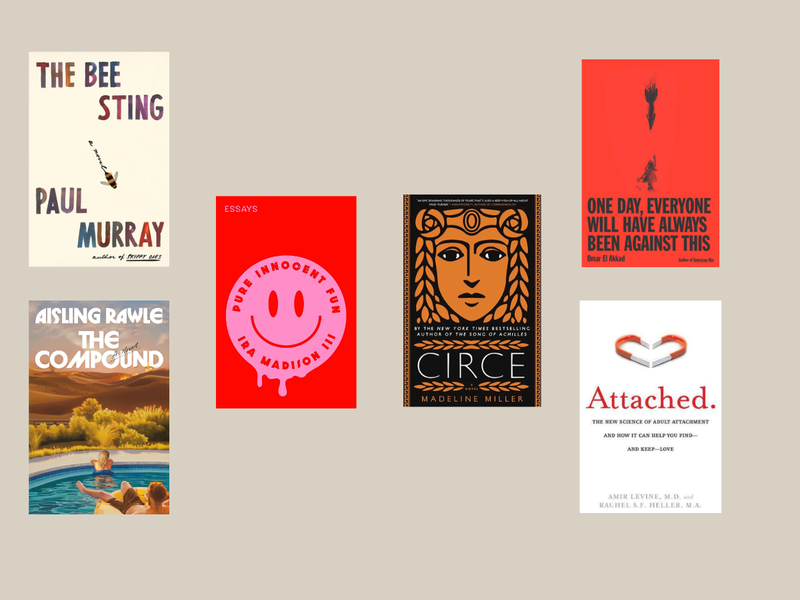
This year is kind of zooming by for me. But to be honest I had kind of given up on the year in July. I remember coming back to NZ and being like wait a minute I still have five months left. There are still so many goals I could achieve. Granted I didn’t make much progress on them. But there were things I did that did brought me closer to them. I was two books away from finishing the Goodreads Summer Challenge and some of the books chose were influenced by that list. Others were what my library had available for me. Here are the books and my thoughts.
The Bee Sting by Paul Murray
This has been on my list for a while, but I was not motivated to read it until it was one Dua Lipa’s Book Club reads. I feel I didn’t treat this book with the gravitas it deserves because I was so focused on catching up on blog posts (I guess I can’t read and write simultaneously). Anyway, I did end up finishing it. The book is about a family in Ireland going through a rough patch in their life, all in different ways. We follow each character on these different paths, so it was interesting to see how they saw each other and interacted, especially based on what you remember from the other character’s perspective. Let me tell you, I was not prepared for the ending. What was it? I felt like I was seeing it coming and was like, “No, I won’t let it happen.” I didn’t want to finish to prevent it, but the sheer will to mark it as finished was a greater influence. Dua Lipa also interviewed the author on her podcast but I have not checked it out yet. But Dua Lipa can truly do it all. But I have to say, if I catch this author, we have beef.
Pure Innocent Fun: Essays by Ira Madison III
Pure Innocent Fun is an essay collection by Ira Madison III, the host of the podcast Keep It and a show writer, having written for many websites like BuzzFeed, MTV, etc. I find Ira funny, and his critiques on pop culture and music on Keep It are pretty interesting, although sometimes they differ from mine. So, I listened and then read this book because I ran out of Spotify audiobook time but felt it lacked depth. I guess a lot of the pop culture that shaped him is obsolete or were properties I have never revisited, e.g., Buffy and Family Matters. He goes into his backstory and what pop culture, and childhood memories shaped him, but it didn’t feel deep. I think listening to the book felt stronger than just reading it. There is a bit of an unrelatable factor between us, but I think there are some snippets people can relate to.
Circe by Madeline Miller
Circe is a mythological retelling about the witch Circe, the daughter of the sun god Helios and his wife, the nymph Perses. It follows her life in the early years, in exile, and the heroes and gods she meets. I read Song of Achilles before, which is set during an actual war. I found this book to be stronger; Circe is a more interesting character than Patroclus, and she has more influence on the plot. Despite being unfamiliar with Greek mythology, I was still interested enough to research the characters or parts I was unfamiliar with for context. We also get to see Odysseus, and I am like an Odysseus stan, that man is so intelligent, like if I had 1% of his brain, I would be unstoppable. Everything about him is so impressive; it’s been so long since Homer wrote those epics. Still, we are like that man, Odysseus, he did something. Circe is peak elder sister core; she constantly wants parental approval, never gets it, makes one mistake that she confesses, is exiled for it and then has her family underestimate her at every turn. People see her obedience as her weakness, but she picks and wins her battles. Also turning men into pigs, icon behaviour. I must say, Greek and Roman gods are mean, that is my takeaway.
The Compound by Aisling Rawle
On a podcast I listen to about Reality TV, one of the hosts read this book and talked a bit about it, which motivated me to pick it up. The Compound is about Lily, who joins a reality TV show called The Compound, where a group of girls and guys have to live in a house and complete challenges together and individually for prizes. Most people are on the show for a break from their reality, where there is a war in the background and a more extreme version of the climate crisis and lack of upward mobility. Although characters are banned from talking about their lives outside of the show, as it is not the focus, we see how it seeps into their lives.
As someone who watches a lot of Reality TV about dating, I find it odd when in real life contestants forget that there is a world outside of the show. Mainly because it is more of a launching pad for an influencer career, and being on the show is not enough to make it anymore. In this book, we are basically inside the mind of a contestant like that. Lily, a blonde Insta baddie, wants nice things; she doesn’t know what things. She feels there is nothing for her other than being pretty and famous. We see the compromises she makes to maintain that fame she craves and how meaningless it is in reality. The book also has commentary on the production of shows like this in how they deliberately cast volatile and vulnerable people, and how the isolation opens these people for manipulation. They also discuss racism in the show, but in other ways, like there is only one Black contestant and although she wears her hair naturally, she is constantly given straight wigs for prizes. It also discusses the viewers and how, although some of us look down on these people, we still watch them and then discard them. The prose was relatively straightforward, the book was readable, even though I wanted to shake Lily to get her out of there. I still kept reading. I recommend this if you watch shows like The Bachelor franchise, Love Island, Big Brother, or Netflix reality TV shows.
One day, Everyone will have always been against this by Omar El Akkad
I have been wanting to read this book for ages. The timing worked out that it arrived in my Libby account around the 2nd anniversary of the October 3rd attack. In this book, Omar grapples with the idea of the freedom offered by living in the West while also watching people like him die in a genocide enabled by his adopted home. He argues, “Why speak up against this now when you can wait when it doesn’t matter to speak up then. For example, we saw the war in Iraq; we saw it just now when some celebrities who had been quiet for two years spoke up because it’s easier to look away. Omar puts into words some of the thoughts that I have been having since it happened. He also highlights some of the attacks that have been happening against freedom of speech and the treatment of protesters, which seem like what we see in other parts of the world with authoritarian regimes. In some places, there are two sides of the political spectrum; one side supports Israel, and the other side is made up of people who think it’s bad what’s happening, isn’t it? He talks about the facade of the West to seem like the good guy, but to me, it was always fake because growing up watching Bollywood movies post 9/11, I have always been critical of US foreign policy, as I feel they only cared about resources, and the war on terror was racist and Islamophobic. Although I have feelings similar to the author’s, I am privileged that I can look away. In an insignificant country, there is so little that we can do. As an investigative journalist who covers the Middle East, Omar can’t. I find the violence too much, so don’t even try to seek it out. He has no choice.
I think we disagree on one thing, which is that people would care if it weren’t Muslim kids. I disagree. We see school shootings happen in the US every day, and everyone has moved on, no change in gun laws, nothing more than thoughts and prayers. I also found myself swayed on his side in terms of voting in the US presidential election. Like Democrats have been relying on we aren’t them as their strategy, and it’s been failing for years. It’s time they give people (like all the base they court) a reason to vote for them. While finishing this book, a ceasefire has been reached but I don’t feel peace with it; just a cynical thought runs through me which is for how long? We don’t even have an estimation of how many died and will die due to famine. It hasn’t changed anything, so I remain sceptical.
Attached: The new science of adult attachment and how it can help you find and keep love by Amir Levine and Rachel Heller
Attachment theory has gone mainstream; I remember my sister reading this book. I feel it is pseudoscience, like personality tests and love languages. These things flatten people into certain identities, and I don’t think people have the same attachment in all their relationships. I picked this book up because someone recommended it on some self-help video (don’t ask), and I decided to look into it. I read the Goodreads reviews beforehand, and I remember that one talked about how it’s very biased towards people with anxious attachment and dunks on avoidant people. After reading the book, I understand how that person came to that conclusion because there is much more information about anxious attachment and their quirks. Still, a relationship with an anxious attachment seemed full on. I felt it infantilised them in how they were described and the reassurances they needed.
The book didn’t really convince me of the idea; it did talk about how attachment style can change overtime and I agree that we are influenced by how we are parented. I did the attachment test, which didn’t feel applicable to me. I came away with 6,6, and 8, with avoidant being my highest. I don’t see how this score can firmly put me in the avoidant camp. I thought about it, and with relationship stuff, I relate them to my education because it was a relationship, and toxic! Then, currently with job hunting, I feel I have some avoidance tendencies because I find that if a company shows interest in me, I at once don’t want the job anymore. Obviously, there is something wrong if they want me. The book doesn’t sell me on attachment theory yet. I felt like the evidence was lacking, and although it did have a bibliography, they kept mentioning a study found this or that, but there were no proper in-text citations. It would have made the book more compelling, as I would have looked it up and seen the studies they mentioned. I discussed it with my sister, who said you don’t have to be a firm believer in it, but if you find something that you identify with, you can use some of the strategies to help with that. I read it last night and I’ve already forgotten any lessons from it other than to not date an avoidant. Apparently, if you’re both avoidant, you don’t have enough glue to hold it together; otherwise, I don’t know.
Until next Time!