
Revisiting the Hunger Games
1st November 2025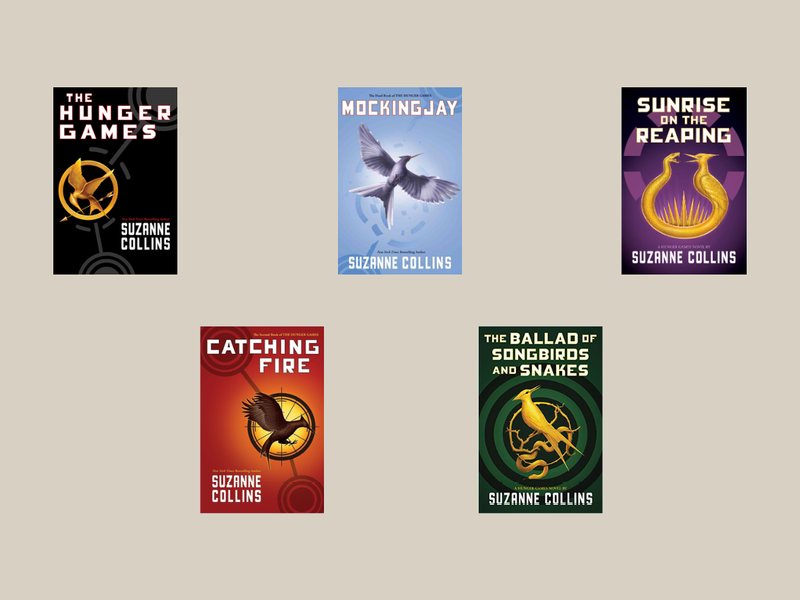
With the new Hunger Games book coming out, I decided it would be a good time to reread the entire series. I first came across the Hunger Games in 2012 after the movie. I didn’t really get the film, but I was going through a not like other girls phase, so I hated everything popular. But I like to be an informed hater, and as everyone says, “THE BOOK IS BETTER”, I decided to read the books. Honestly, the book was better. I remember being so engrossed in the books that I read them at Maths camp. The books became the first series where I had read the source material before the movies came out (for the next 4 movies at least). It was a different feeling, and watching the movies become an annual ritual for my sister and me. We would watch the film after our exams and then walk back home to discuss what was different, if we liked the changes, or how some of the book scenes were portrayed.
I wanted to re-read the books to see what adult me would make of them. My media literacy was low the first time because I had not gone through Year 12 English, which changed how I interact with media. Also, as a teenager growing up, around movies and film which focused on kids and teens saving the world. You don’t think about how horrific it is to have teenagers be the face of rebellion. With that being said, let’s dive into my thoughts.
Spoiler Warning
The Hunger Games by Suzanne Collins
When I first read the book, the last paragraph of Chapter 1 became etched into my brain. It was still so chilling after all this time. In the first book, we follow Katniss Everdeen, who volunteers for the Hunger Games instead of her sister Prim as she survives the games and ultimately wins. Going back, I didn’t realise the nuances of the class divisions. The most obvious example is how districts are starving with people dropping dead being common, but the Capital is well fed and is even able to waste food. But there are class divisions even in the districts with the tesserae, where kids can enter multiple times for a yearly food allowance. Another way to systematically oppress poor people and disadvantage them. Another deeper layer is the reality TV competition; The Hunger Games is not only a punishment for the districts but a lucrative business. How vital the glitz and glam are doesn’t go unnoticed as an avid watcher of reality TV shows like The Bachelor and Survivor. Collins’ portrayal of how it affects the tributes and audience was correct. Even in shows that aren’t competitions, the audience being on your side is essential, and I think Collins captures that. How you appear on TV is really important, and before, I had never noticed how camera-aware Katniss was. It also shows Katniss is one-track-minded and only cares about her and her family’s survival. My first time reading it, I never realised she had a crush on Peeta this whole time! I think this book is good with world-building, and I think it still holds up.
Catching Fire by Suzanne Collins
Catching Fire was my favourite book in the series, and after re-reading it, it still is. Everything is grander, and we get to explore more of the world. Mental health has been an important part of these books, but how it is handled seems to evolve. In the first one, Katniss is really judgmental towards her mother’s depression after her father’s death. But in this book, she shows more understanding of it as she has PTSD from her time in the arena. We explore more of her relationship with Gale and Peeta and explore both Panem and District 12 more. I feel like with Gale, something has changed between them, and they both do not want to come to terms with it. With Peeta, she thinks he is too good for her but can’t separate what the Capitol wants from her and what she wants. In addition, Katniss is about survival for her and her family, so the last thing on her mind is a boy.
I also noticed the foreshadowing, such as Katniss’s interaction with Plutarch Heavensbee, and then we get to the Quarter Quell. I remember finding the stories about the Victors interesting, and then when we got to meet them, I remembered how they matched up to what Katniss thought about them. With the Victors, we see how they are more seasoned than the tributes, and we get to see the special treatment of Katniss and Peeta due to Katniss being the Mockingjay. They all seem broken in their own way, and I think what they did in the arena is heavy. Like a sad mixture of guilt because it is kill or be killed, but at the end of the day, they didn’t have personal vendettas against the people they killed, because it was the Capitol that was forcing them to participate in the games. That is why the Haymitch line “remember who the real enemy is” hits so well. I feel there are a lot of big moving pieces, but many small moments as well. Then, the end, when we find out what happened to District 12, is heartbreaking.
Mockingjay by Suzanne Collins
Reading Mockingjay again, I have a new appreciation for it. It is more mature than the other two regarding themes and subject material. We see Katniss navigating her life in District 13, away from Peeta, who is captured in the Capitol and how she deals with the trauma from her time in the arena and her role in the now-rebel war as the Mockingjay. When I was reading it the first time, I didn’t realise how claustrophobic Katniss found District 13, which lives underground, and her having lost her father in a mining accident. I also didn’t realise how authoritative District 13 is with their mandatory schedules, strict food allocations and severe punishments. Sure, they aren’t killing kids by making them fight each other, but the citizens don’t exactly have free will either, no? As a teenager, having a strict schedule didn’t seem like a form of control; it just seemed normal. I also didn’t realise then that District 13’s involvement in the war wasn’t because they aligned with the districts or from the good of their hearts, but because they saw it as an opportunity. Katniss is very wary of District 13 President Coin and was distrustful of her from the beginning. When Katniss becomes the Mockingjay, we see more of how marketing her works and what being a symbol entails.
In this book, we see a clear divide between Katniss and Gale. Gale becomes somewhat of a true believer in District 13, instrumental in strategizing the war, whereas Katniss is still a reluctant participant. She doesn’t have the same anger Gale has, but instead, she is traumatised by all the suffering and wants it to end. I can see that now more.
This book has a lot of death, but there a lot of things I missed in my first read. For instance, Prim’s death, I made the connection that it was done by Coin to incapacitate Katniss so she couldn’t have a say in the next president’s leadership. But other things are happening here, Katniss’ grief and inability to do anything is generational because her mother went through the same thing when her father died. It also shows that in war, everything is on the line; her whole life’s purpose was to protect Prim, but then the war took that from her as well.
I didn’t know the ending for the series was controversial, but I think it was good, because Katniss is a protector, and her reasons behind not wanting kids were that she didn’t want to watch them die in the arena. She couldn’t protect them like she could Prim. Also, something interesting here is when Heavensbee mentions having a democratic process for a government institution, Katniss is a sceptic of the concept. But 10 years later, she decided to have kids, which shows how even she believes they can live peacefully.
The Ballad of Songbirds and the Snakes by Suzanne Collins
The Ballad of Songbirds and the Snakes is about Snow and his rise in power as he is tasked with mentoring a tribute from District 12 in the form of Lucy Gray Baird. I read this book in 2018, so my thoughts have not changed much since then. Snow comes across worse in the reread because we know where he is heading. My initial thoughts from the book are that it shows how little regard the Capitol has for its kids. It highlights the idea that if they will let Districts’ kids die in the arena, then that bleeds into how they view the Capitol kids as well. In other words, expendable. We learn more about how the war affected the Capitol, specifically the Snow family. Snow we learn is image driven and all he cares about is to live up to his name. he is quite elitist and looks down on the districts. But he feels acting on this impulse is beneath him. When he develops an infatuation with Lucy Gray, he can only do this by elevating her status by telling himself that she is not really District, and that is the lens he frames her in. He sees her as a possession and a means to an end. We go further into how the games came to be and how they would’ve died out if they were not entertaining or engaging. Rebel bombings meant the old stadium being used for the arena had to be replaced with a new location that no one was privy to beforehand.
As I read this after reading the original series, I kept making parallels between Snow and Katniss. What I noticed about both is that they are both instinct-driven, whereas Katniss’s instincts are usually to protect others. Snow’s instincts seem to bring out the worst in him. We really see how this boy was able to become the dictator of the original series.
Sunrise on the Reaping by Suzanne Collins
It took the library a while to get me this book. When it did come it came with three other of the more highly anticipated books in my reserve list. So now it is a race against time to see if I can finish all three soon. But I persevered and wrote this as soon as I finished the book. Anyway, Sunrise of the Reaping is a prequel to the Hunger Games series is the 5th book and follows Katniss’ mentor Haymitch Abernathy during his Hunger Games which was also a Quarter Quell which had double the number of tributes.
Haymitch is a different protagonist to Katniss who was somewhat of a loner, Haymitch is not, he has a loving family, close friends, a girlfriend and makes friends easily. Although they have similar circumstances in terms of losing a father in a mining accident the grief didn’t swallow up his family in the same way it did Katniss’. I guess he also works as a bootlegger which requires one to be more social than selling game. A good thing about the prequels in these books is that they don’t directly tie into the original like we aren’t directly setting up for the Hunger games in first book. Rather they tell its own story set in the same world as the original. There is some fan service in here, but it doesn’t seem out of place or had to bend the rules of the other books for it to occur.
We all know that Haymitch won the games, which in this book are more frightful, cruel and horrific somehow, especially considering the sheer number of the causalities but we don’t revel in it. As the story Suzanne focuses to tell isn’t about the game itself but about the efforts of the rebellion and the messaging. For the kids in the Quarter Quell, they take being chosen as an instant death sentence, they care more about how they will die rather than if they will survive. Haymitch never wanted to make it out alive he just wanted to go out making sure his death and efforts would stop these things from happening again. Unfortunately, it didn’t work out that way. In that way he is like Snow, he cares a lot about how he will come across and the message his actions would send. A spin doctor in the making that Olivia Pope would be proud of. But we also see how malleable and weak these efforts are. When he is watching his games back, we see how his actions in the games have been misconstrued in the highlights despite most people watching in real-time. Bringing also to light how deep the Capitol programming goes and how most people will tell themselves a story that is more palatable. It is an example of History is written by the victors.
Overall, I enjoyed this book it was written well, very thought provoking, and had a very clear message to tell. Like the other books in the series it didn’t seem to be pure fan service or milking a franchise for all you could. It shows a different perspective of the toil the games can have, and I welcome it in this climate.
Final Thoughts
I think the Hunger Games series was really popular and critically acclaimed. It is well deserved as the books are still entertaining to me as an adult, and the themes don’t feel dumbed down or toned down for a younger audience. I do think there is a lot more subtext that you understand as an adult. Also, notice more about likeability, charisma, and how you present yourself. We often teach kids that working hard and being ambitious can overcome those factors, but they cannot. Another instance is the love triangle, used as an allegory for just war theory. Ok, for my past as a teenage girl, I was Team Peeta. He and Katniss had a stronger connection, but I have to say. Reading this now, it is clear there was no love triangle. It seems Katniss always had a crush on Peeta but never acted or thought about her feelings until she felt safe enough to do so, like in the first book, she is all angsty about it. I think the Charli XCX song Yuck really encapsulates how she feels. See seeks safety and comfort in Peeta, which she didn’t get from Gale. Another thing is how sad it is about the District 12 bombings, so many innocent people died, and Katniss feels she bears the guilt of it. The Hunger Games are brilliant, and I think they have a lot to say about reality TV and war.
When I think about the prequels, I think they do more world building and give us different perspectives. It is hard not to compare the three protagonists to each other. Like I said Snow and Katniss are very instinct driven, but Haymitch is not, often freezing in fight or flight situations. He plans and executes but he and Snow are more image-driven in a way Katniss is not. Although all three characters grew up as orphans I think Haymitch was the most well adjusted which goes to show how heartbreaking it is that he ends up as drunk loner to try and make sure no more people are caught in the crossfire.
Sunrise of the reaping is not a hopeful book, and I am thankful for it. Like The Testaments by Margaret Atwood was a hopeful book and I just couldn’t buy into it with what was going on in the world. Although we do have an epilogue that is somewhat hopeful. This book I felt was more mature in its themes and the story it wanted to tell. When I compare it to what we learned about Haymitch’s games in Catching Fire it is exactly the same. A writer who works in the constraints of the world they created! Suzanne Collins you are a marvel. I am looking forward to the movie. But I hope this will be the last installment in the series. Not because I don’t think Collins could do it justice but having books focused on the Hunger games being mass consumed would at some point dilute the message of how horrible they are supposed to be. Then we would have to ask ourselves the question are we the Capital?
Until next Time!