
Moving through Madrid
24th May 2025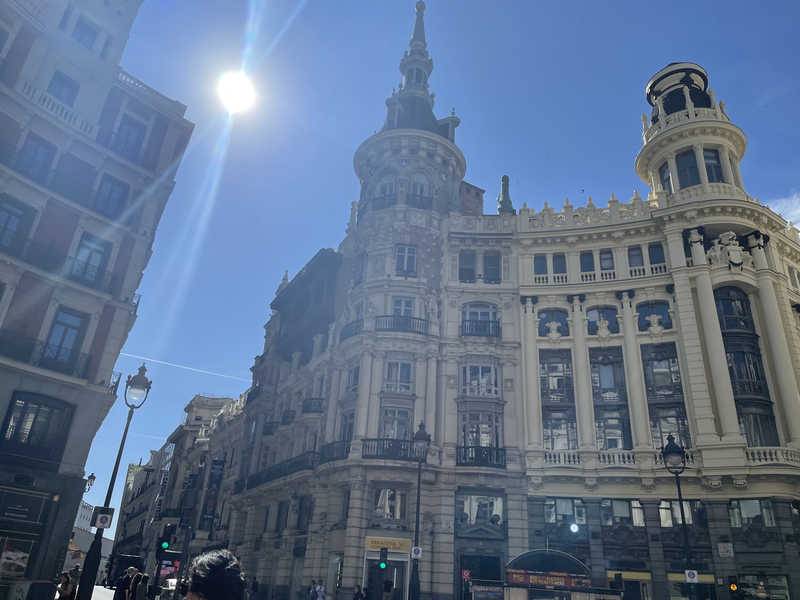
For Spain, I oversaw researching what to do there. I did my research and also what to be aware of as a tourist. There were many warnings about pickpocketing, and people are out to scam you, be careful about your belongings and safety, etc. So, we were a bit concerned, but it was fine when we went to Madrid from Naples. I’m not saying those things don’t happen, but they are not that different from the other places. Madrid, though, is relatively cleaner than Naples, so we already felt better. For Madrid, we were inspired by the It girl Dua Lipa. Dua Lipa has a Service 95 website where she talks about her travels among her book club. She has good taste and politics, so I trust her. So, this is what we did.
Museo del Prado Nacional
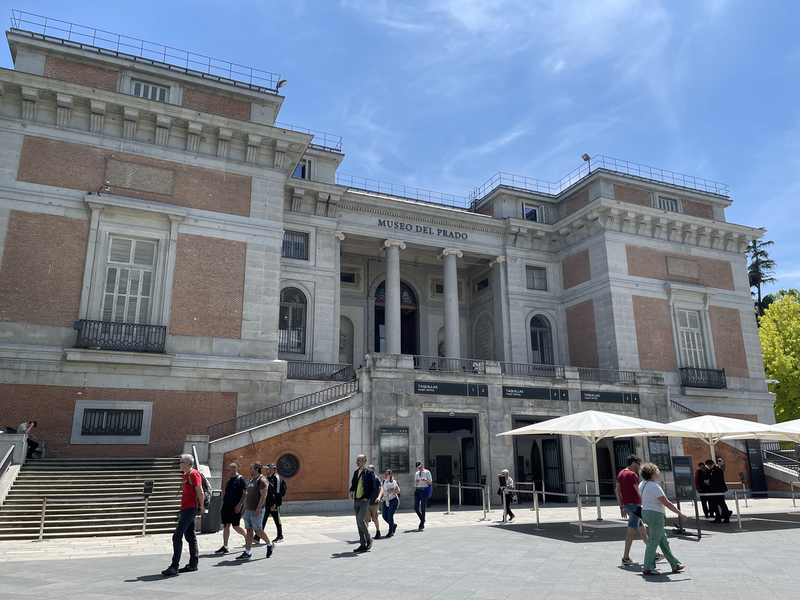
We took the subway to the Prado Museum early in the morning and had breakfast at a nearby café. They had flat whites, and I had one of those. It was ok. Brunch was pleasant, then we went to the museum. Museo del Prado is the National Art Museum and was founded in 1819. When Pablo Picasso studied art in Madrid, he came here to recreate paintings. The museum has the works of Goya and Greco and the Spanish royal collection. It also includes some sculptures and luxury china on the top floor. We spent much time looking at the paintings and artwork in the museum. A lot of it is inspired by Christianity, as expected. For some reason, many artists were influenced by the lactation of St Bernard, which is interesting…
They don’t let you take pictures at the museum, but people are around recreating some of the paintings, which was pretty cool. Some of the pieces were commissioned for church and it was interesting how they changed; some 13th-century paintings look like they were created now. One of my favourite paintings was the Landscape with Charon Crossing the Styx by Joachim Patinir, I think I liked the blue.
Chocolateria San Gines
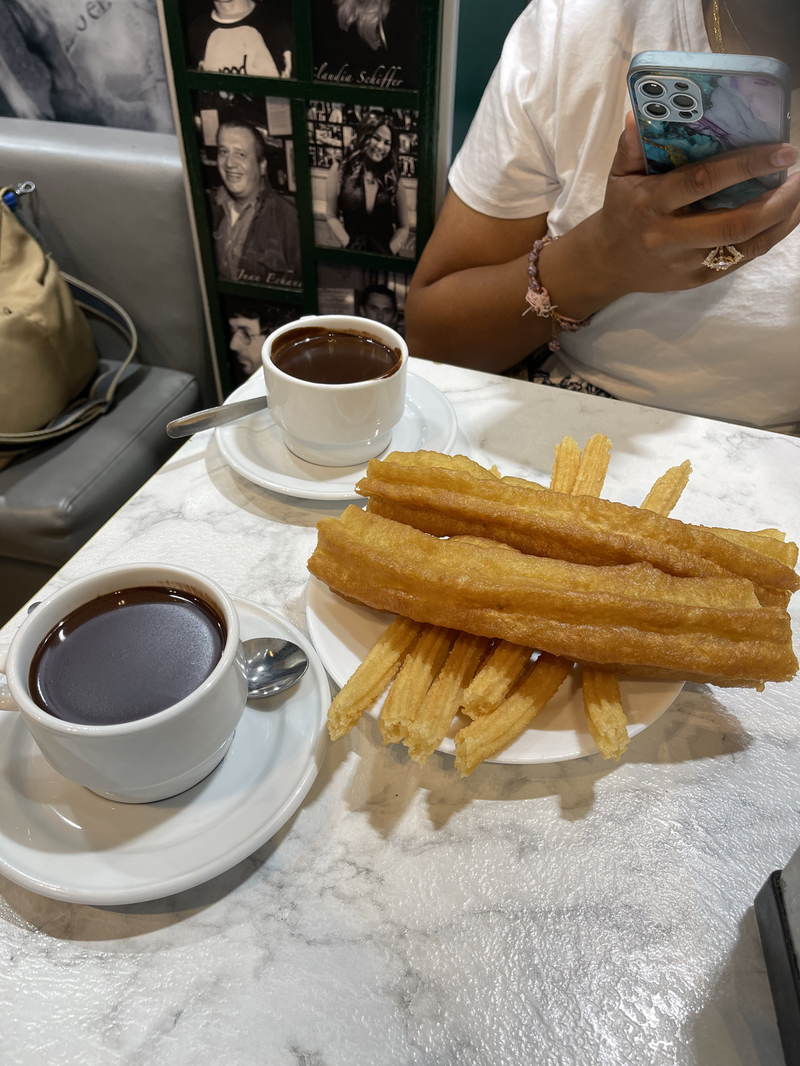
Dua Lipa said this was the best place for churros and so it was our first stop the next day. This shop was founded in 1894 and is one of Madrid’s most famous chocolate shops. There are around three sites, so there was no long wait time. We had hot chocolate with churros and porras. The churros were thin and crispy, while the porras were thick, crunchy on the outside and soft inside. They were of good quality, and the hot chocolate had the consistency of melted chocolate. The salty churros and porras paired well with the sweet chocolate and were the perfect way to start the day.
Puerta de Acala
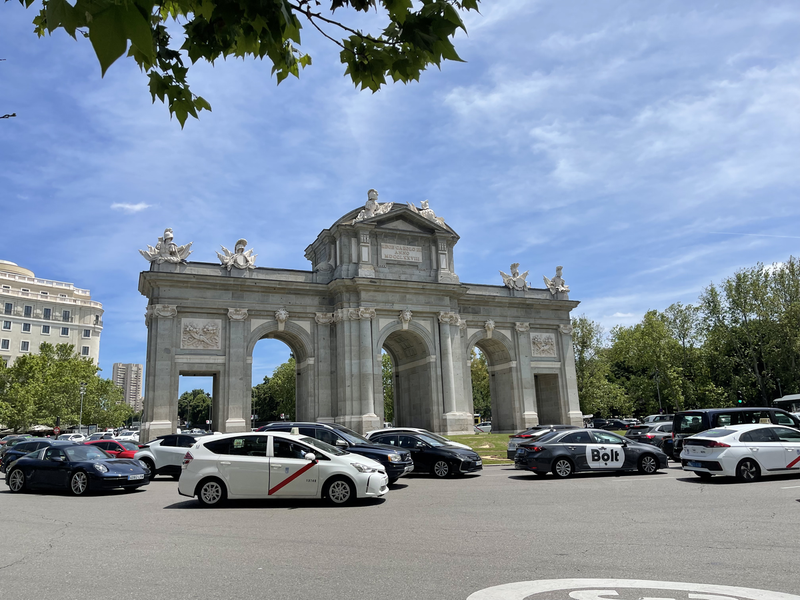
This gate in a central roundabout was created in 1778 and commissioned by Charles III. It was cool; we took photos while the cars stopped at different times.
El Retiro Park
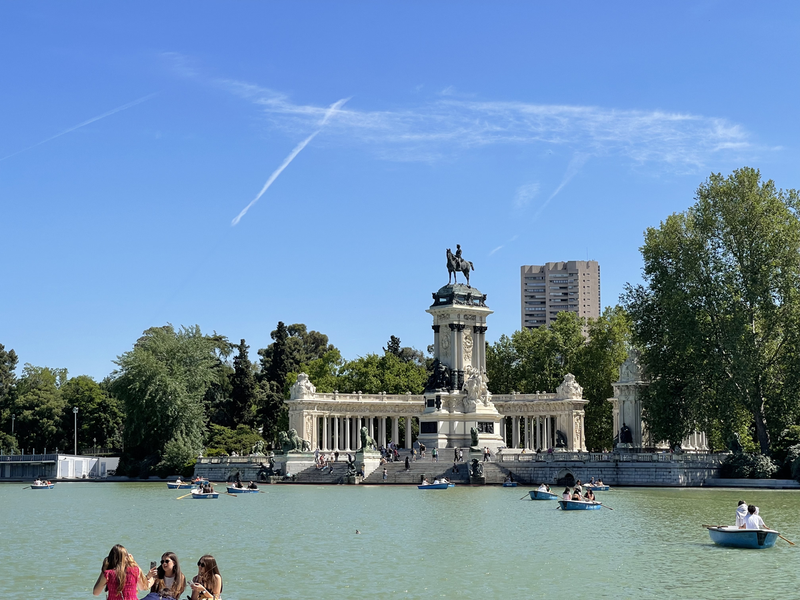
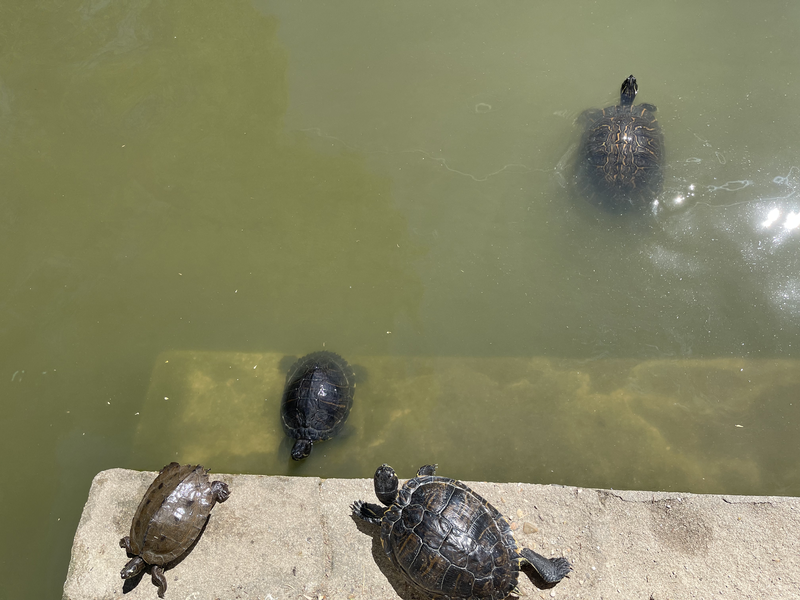
Next to the Puerta de Acala was our next stop. El Retiro Park. The park is really manicured, and we took some photos of it. It used to be owned by the Spanish monarchy until 1868, when it became a public park. There is a crystal palace, but it was closed, and you can go on a boat ride by the lake, but we didn’t. We spent some time sitting by the pond, which has turtles (below), and they were so cute. People were running in the park, and as it was afternoon, I was wondering if it was too hot to be running. But to each their own, I guess.
Museum of Anthropology
This museum was a short walk from Retiro Park. We had some time to kill, so we checked it out. The anthropology museum was free! I don’t know if it is generally free or if there was some promotion then. The museum has three floors, each focusing on different cultures. One was Filipino culture, the second was African culture (mainly Guinea), and the third was South American. They covered customs like marriage, funerals, and everyday things like musical instruments, games, toys the kids play with, etc. Some Hindu idols were sourced from Nepal; it was interesting what stories they used to talk about them. There was also an exhibit showcasing photography by Ayana V Jackson. I loved how dynamic and colourful the photos were. I even follow her on Instagram now.
Temple of Debod
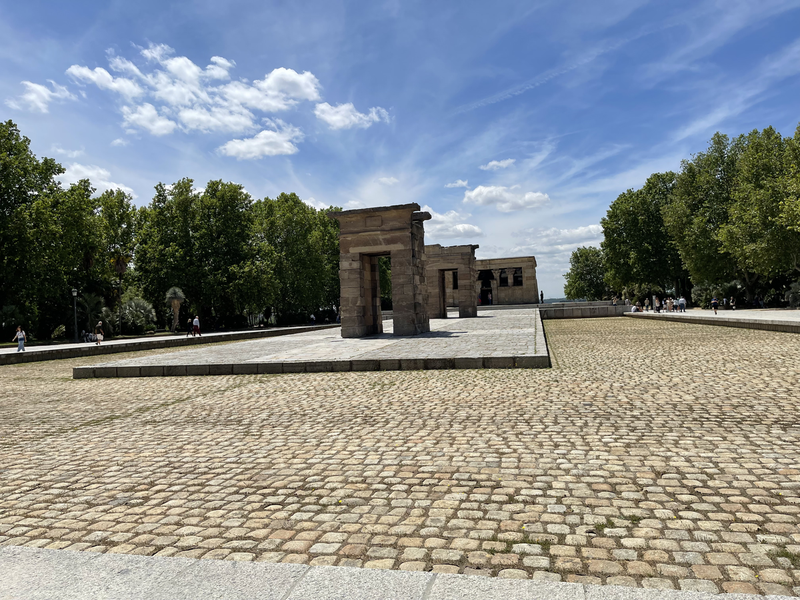
We then on the way to the Palace, from the museum walked past the Temple of Debod. This ancient Nubian temple was erected in Egypt in the 2nd century and dedicated to the goddess Isis. It was donated to Spain as a sign of gratitude for their participation in the international campaign to save monuments of Nubia in 1968. It is one of the few kinds that have been relocated, so we were keen to see it. What we didn’t know at the time was that you can go inside! But they only let 30 people in at a time, so we didn’t get tickets online. We looked at it from afar, took some photos, and then were on our way.
Royal Palace of Madrid
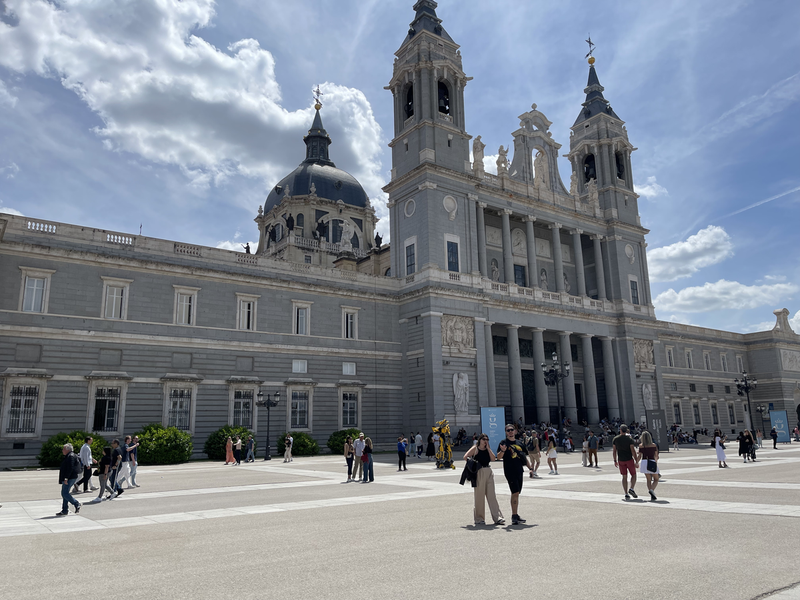
The royal palace is the official residence of the Spanish royal family. Although, it is now just used for state ceremonies. It has 3418 rooms and is the largest palace in Europe. It contains a lot of artwork, luxurious items and the crown jewels. The history of the palace is interesting; you can read about it on Wikipedia and its official website.
So, a funny story is that the Palace was closed on one of the days we were in Madrid, and there was no information about whether you could buy a ticket on site. So, the only available ones were through the tour. The problem was that the tour was in Spanish, so I booked it, and we thought we would power on. I thought we should do the tour because leaving would be rude. We had this discussion many times, so imagine how irritated my sister was when she saw you could buy tickets at the site, although the line was long. We got inside the palace and couldn’t locate the guide or the tour group. Duolingo Spanish did not prepare me for this! After a few minutes of idling around, we decided to enter the place.
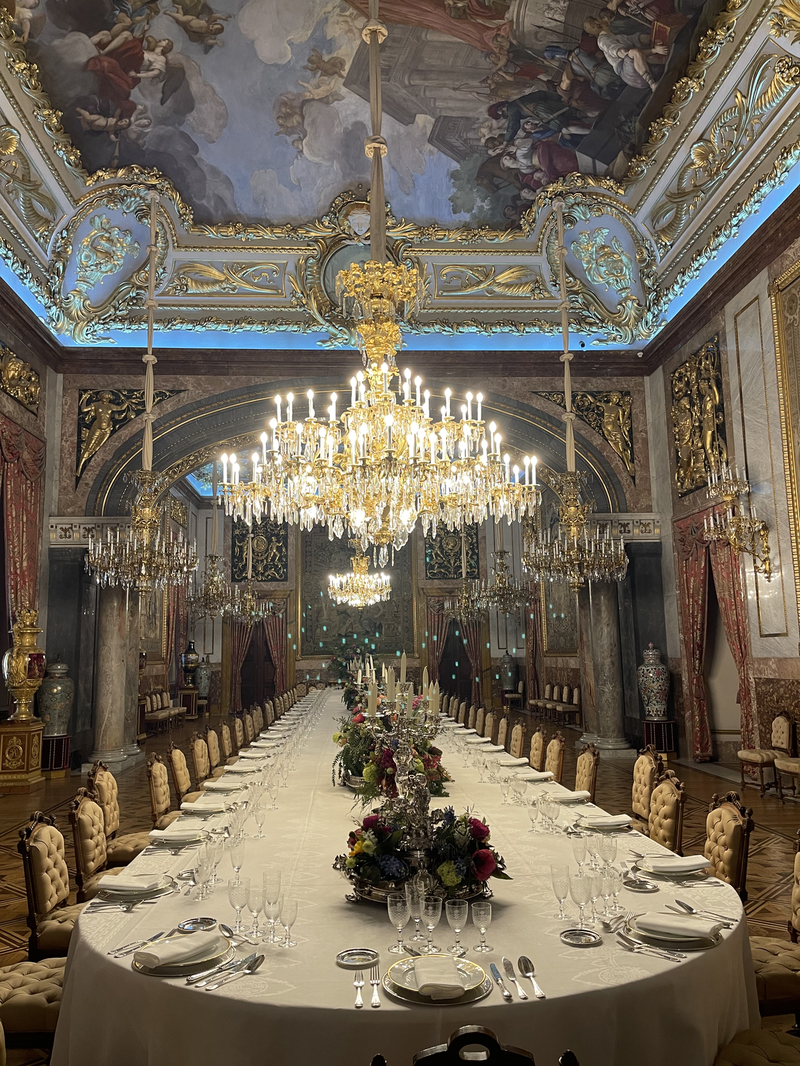
The rooms open for exhibition are the staterooms, the banquet hall (above), some bedrooms, and the church, among others. The palace is grand, giving me the vibe that royals live here with decoration, beautiful artwork, luxurious fabrics, and other pieces used to dress the rooms. Like the banquet hall, the silverware and delicate china are also displayed. It also has the crown jewels and the throne room. I wondered how the engineers and architects had considered things when creating this place. Unfortunately, the kitchen was not open at this time. But it was gorgeous, and you can see most of Madrid from the palace.
Plaza Mayor
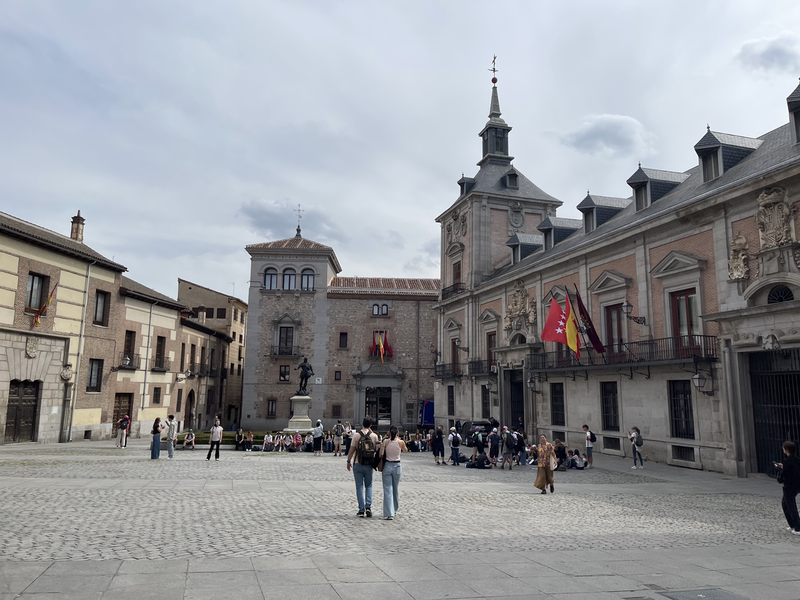
Plaza Mayor is the main square in Madrid, where we took some photos. I had a bocadillo de calamari from one of the food places here. It was so simple: deep-fried battered squid in a roll covered in aioli and tomato sauce. It was so simple but tasted so good, and I can’t believe we don’t see it more here. The square was alright.
Mercado de San Miguel
Mercado de San Miguel is close to the plaza, which reminded me of Commercial Bay. It is like a food court containing different cuisines; you can get wings, cheesecake, pizzas, burgers, paellas and mocktails. Probably the first and last place I saw mocktails in Europe. It seemed a popular location for tourists. As a Kiwi, the NZD was starting to feel a bit thin; it’s Europe’s fault for the easy conversion! We were a bit apprehensive about spending so much money on food and then being disappointed. I did overcome this and tried some new things here, such as patatas bravas, which were pretty good, and chilli jam camembert bruschetta. They also had some nice-looking desserts (it seems more like cookies where they added a bunch of toppings). But I had churros and gelato already, so I thought I should avoid sweets.
Final Thoughts
Madrid seemed to me like a less touristy city. Although there is a lot you can see. It is the capital, and so it seemed a bit more metropolitan. We took the subway everywhere, and it is very walkable. A breath of fresh air compared to Naples. The drivers are much more polite, not aggressive but considerate. Compared to Italy, there is a more diverse food culture here. I enjoyed my time here and would love to go again.
Until next Time!