
April June Books Roundup
8th June 2026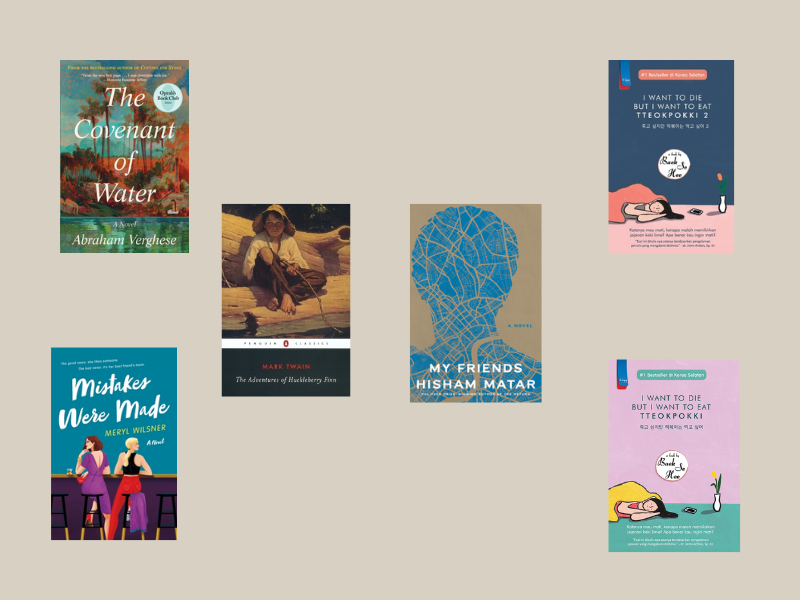
Look, I know there are a lot of books on here, and I should have split the list. But I wanted to have even month pairs, like the next post would be (July-August), not (June-July). Besides, it is my blog. I think the books I read in this quarter are going to be some of the best ones I read this year. I remember finishing some of these books and feeling blessed to hear these stories. I have to say about them, so here goes!
The Covenant of Water by Abraham Verghese
Back in 2023-4, I had PREZZY cards I needed to use up, and one way I thought I could do that was to buy books. I am not a book collector. I don’t like buying books I won’t reread, but I was drawn to this book. I felt this was a book I would want to read at various stages of my life. I took it with me to Fiji and India twice, but I never got around to it. I ended up reading it this month. It took me a month for a multitude of reasons. I read it with a dictionary because there were words, I didn’t know the meaning of, and I didn’t want to miss their meaning by inferring, as I am inclined to do. Some of the words seemed a bit ostentatious, like recumbent instead of reclining and rent instead of tear? Who uses rent in that context anymore? But the book was over 700 pages, so I have a lot of thoughts, brace yourselves. (To be honest, if you saw me whilst reading this book, you already know how I feel).
The book is set in Kerala in the 1990s. It follows Big Ammachi, the matriarch of the Parambil family, from the day she is a 12-year-old to be married to her 40-year-old husband, to the different roles she takes on throughout her long life. We see her evolve from a girl into a wife, mother, and then grandmother. I was really drawn to hearing her story, as I feel it is similar in some ways to my grandmothers’ and great-grandmothers’ stories, despite the differences in religion, culture, and language. All my grandparents died before I was old enough to pick their brains about their lives, how the country changing affected them, and it’s a story often untold. So, I am glad the author’s mother’s life loosely inspires the book.
Reading this book was a human experience; it moved me, and, having finished it, I felt sad to let these characters go. I always get too attached to long books, or if I read a series altogether. I felt a lot of emotions: joy, hope, sadness, grief, hurt, betrayal, indignation, annoyance, laughter and inspiration. Mostly to write about my thoughts on this book. Based on my unspoiled thoughts, the book is separated into parts. It does follow different characters, which, when this first happened, annoyed me because the first part kind of ended in a tragedy. I wanted to know what happened next, but instead, the book shifted to a different character’s perspective, which I found really unwelcoming because nowhere in the back of the book did it say we would have other characters’ perspectives, and those, too, who weren’t part of the main family. It was set in a different place as well. Then the book got me again because it ended part two on a cliffhanger, and I was like, “Now I want to know what happened to this character I didn’t even like.” “Why?”
At 700 pages, it is still somehow a hard book to put down. There were times when I just felt mad, or sad, or another emotion that made me feel I didn’t want to finish it because I could see where it was going, and I didn’t want to go there. These revelations always coincided with the last chapter that I wanted to read before bed. But after the initial investment, how could I not finish the book?
Then, to make matters worse, 600 pages in, we, the reader, would feel betrayed. I had to stop reading because I was travelling, and I knew I couldn’t finish it then, so I had to sit with that feeling. I thought coming back after a week would lessen the blow of the betrayal, but no. I was simmering with it and would complain to everyone about how this book personally wronged me.
I took it personally, and then I had to analyse why I felt so betrayed and what it revealed about me. See how this is jobless behaviour? The betrayal changed how I felt about some of the characters whom I used to sympathise with, and although it tied the story up with all the various perspectives. I felt it sidelined my favourite characters and their story. But given how big the story is, I can essentially choose what I find most important. It might seem that the book romanticises things we shouldn’t, but most of the joy and happiness the characters find come from trying to make the best of a tough situation. It is hard to come out of this book thinking, “It romanticises age gaps, cheating, etc,” when the narrative will punish the characters quite ruthlessly and repeatedly.
Funnily enough, as the title of the book is called the Covenant of water, like water rushing down a river to meet the ocean or rain falling to meet the ground, the world moves around the characters’ lives, undeterred and unfeeling about the human strife. It is just larger than what we humans find important. It connects the past, present, and the future. As well as all the generations of the Parambil family. In that way, we see history unfold in the book; we follow the Great War, World War 2, the independence movement, and other historical events throughout these characters’ lives. There was some stuff I didn’t know because I am ignorant, like India’s contribution to the World Wars; I only knew it in terms of rations and famine. I was unaware of the human cost: in World War 1, 1 million troops served, and in WW2, 2.5 million troops served, making it the largest volunteer army in history. Nor that Japan bombed Madras or present-day Chennai in 1943. It does feel like the colonies’ contributions to the World Wars were deliberately erased rather than simply ignored. This was despite the British reluctance to use India, as they feared they would be training future rebel leaders. It was also interesting to read how distant the Partition was to the characters in Kerala, despite how I imagine people in Gujarat felt. Then there is the whole Naxalite movement, I had no idea of it at all and still don’t understand. It does make me want to dive deeper.
What I also found interesting is that the Parambil family are Christian, and how their Christianity is shaped by the dominant Hindu religion. Christianity doesn’t have casteism (in the Indian way). Yet, they practised it, having different utensils for the Pulayer who worked on the farm, despite them being considered “family.” Or that Saint Thomas Christian women have a version of the thaali or mangalsutras. Interesting how a religion adapts based on the culture it is in.
Throughout the book, we also see how a woman’s choices have expanded over the ages. Big Ammachi, when she was married at 12 after her father died, had no choice in the matter. Then her daughter-in-law, a budding artist, is too limited in her choices by the men around her. Her dad supports her career, but after him, she would be dependent on her brother, thus limiting her choices. So, she chose a husband who would support her artistic endeavours. Her granddaughter, who at the end of the book was 27, had even more choices than her mother. She was able and encouraged to pursue her career. Although there are many choices we can make, we need to make the “right” choices that society demands of us. We are lucky to have this privilege that women have died for us to choose. Also, to remember the progress we have made in just three generations and how far we still need to go.
There is also a lot more human suffering in the book, and there are so many themes it covers, love, addiction, friendship, marriage, trauma, grief, religion and child mortality. There are so many diseases that are major factors in the book, causing tragic deaths as they did in eons past. Smallpox, leprosy, whooping cough, polio, cholera, plague, etc., people don’t even think of how revolutionary vaccines and antibiotics were. But they were! I find it funny that, despite not seeking out books with a medical focus, they still find me.
One of my favourite characters was Big Ammachi. She was dealt a bad hand, but she made the most of it, and despite all the ups and downs in her life, she didn’t let them affect her faith or close off her heart. Her resolve, resilience and ability to love so unconditionally were all qualities I wish to grow, especially her hopefulness.
My issues occur in the middle of the book; it is a bit frustrating because we move away from the original main characters and focus on the second generation. Two characters constantly annoy me. Both kept making decisions rooted in trauma, and if there was some introspection, I feel they would have made better decisions. Not here, instead, a tragedy strikes, setting the stage for the final parts of the book. I was also shocked to learn that characters I thought would be there for the entire book fade out or pass away. But I guess that is life, what close friends and family look like when we are younger is a lot different to what they would look like in 20 or 50 years.
Overall, this was a great book. When I finished it, I wanted to read it again to pick up on the clues and hints so I could see where it was going sooner. There are some problematic elements of the book; I didn’t view them as necessarily romanticising. There was one relationship I was not a fan of. I had to keep reminding myself it was a different era, and that people were placed in situations they wouldn’t have chosen otherwise. I feel that if someone read this book, they too would feel as I do.
Mistakes were Made by Meryl Wisner
The greatest mistake was my reading this book. I usually don’t read book reviews until after I have written down my thoughts, but with this book, I did it immediately because I knew they wouldn’t change. I picked this book because the booktuber Cindy had good things to say about it. It did seem messy, and I was reading for the mess, but I felt it was messy in the wrong way. The story follows Cassie, who learns that the woman (Erin) she had a one-night stand with is her best friend, Parker’s mum. It has a dual perspective. Now, when I picked it up, I thought Cassie would be a Grad student. However, she is actually a senior, which changed my perception of the dynamic. Like, me personally, at my age, I find 21-year-olds young and look young. So, I just felt like what does this almost 40-year-old see here.
The book felt overwritten, as for every action a character takes, the writer feels it’s important to tell us their intention. For example, “she smirked to show her arrogance”. Come on, people. Personally, I feel a book with a problematic element should do more work to make us root for the couple. Here, for instance, I thought maybe Cassie is more mature, so there isn’t such a big maturity age gap. But no, Cassie acts like a typical college student in a movie, so I felt confused again about the compatibility. We have instances of how Cassie and Erin interact with and without Parker, and it shifts from maternal and comforting to flirting and domineering so instantly that it felt jarring. In one scene, I found Erin’s actions quite predatory, and I thought that if a man had done this, it would not have flown (never a good thing to say about a romance book). The book also doesn’t sell them as having anything more than sexual chemistry. Both also have immature reasons behind their attraction. Erin feels flattered to be wanted by a young person and believes she’s always done the right thing in life. Cassie feels she’s constantly been overlooked, so she likes that she is so irresistible to Erin that she’s willing to ruin her relationship with Parker. Uh, how is this a healthy dynamic? Erin also goes to therapy, and so we have the most useless therapist ever. Like, why, as a therapist, is she not asking, “Are you attracted to Cassie because you see it as a way to relive your youth because you felt you missed out?” That’s the question I wanted the book to answer, and it doesn’t.
I found the book a bit too crass for my liking. It also was at the expense of convincing me of their compatibility as equals, especially as the way each character describes the other is through “She’s f***ing hot”, like come on, give a reason for this supposed hotness. At some point, I was reading to see how Parker reacts to this relationship dynamic, and when it is revealed, we find out she’s fine with it because she processed it all off-page. Talk about a cop-out; it felt completely lazy, and they could have cut 50 pages from the book to develop that. The happy-ever-after also felt unearned, and I don’t think it answers how the dynamics would actually play out. I feel it is important to read stories from different backgrounds, but this one I should have skipped.
The Adventures of Huckleberry Finn by Mark Twain
This book is set after The Adventures of Tom Sawyer. It focuses on Tom’s friend, Huckleberry Finn, who runs away from home with the enslaved Jim. Jim is about to be sold, and Huckleberry fakes his own death to escape his abusive father, who kidnaps him following the events of the first book. This book is way darker than Tom Sawyer, as it deals with the themes of parental abuse and neglect, con artists, slavery and alcoholism, etc. It is written in the local dialects and is a bit hard to follow, but I did get used to it after a while. The book was written to criticise slavery at the time; however, now it has fallen out of grace due to its usage of the N-word and the way it describes Jim, which I think is a sign of progress. It is definitely a product of its time. It reveals some of the dynamics that existed between black and white people in America at the time.
I think it was an interesting book. I am somewhat naïve about the dynamics of bad parents, and this book explores that through Huck’s relationship with his dad. We see him navigate really adult scenarios with a childlike naivety. His moral compass: he wants to see Jim free, but he also feels guilty about betraying his “owner,” who was so kind to him. I found the book funny as well, especially because Huck is so bad at lying and always gets caught. Hilarities also ensue when Tom Sawyer comes into the picture during the last part of the book. Tom is a menace and has such a wild imagination. Huck goes along with it because he worships Tom or because it would be easier to go along with Tom than to convince him otherwise.
I don’t regret reading it, and I wouldn’t discourage others from reading it; it isn’t my taste. But I am really looking forward to reading James by Perceival Everett, which is fan fiction about this series.
I want to die, but I want to eat Tteokbokki by Baek Se-Hee (translated by Anton Hur)
I think I was motivated to pick up this book by the title and the good things I’d heard about it online. It is described as part memoir, part self-help book and is about a stage in the author’s life where she goes to therapy for her dysthymia (a form of mild depression). The author is unfortunately no longer with us, so I am going to be kind. The book lacks substance because it contains transcriptions of the therapy notes but doesn’t do anything with them. We don’t get much deeper insight into what the author feels beyond her notes. I finished the entire book in one setting, and I didn’t feel like it moved me. The author is somewhat relatable in that she often feels negative emotions and then feels guilty about feeling that way. My other takeaway was how interesting it was to see Korean culture’s obsession with beauty reflected in some of the insecurities and discussions the author has with her therapist. Otherwise, I wish I had more to say, but I don’t. I will read the next one, though.
I want to die, but I still want to eat Tteokbokki by Baek Se-Hee (translated by Anton Hur)
I read this book shortly after finishing the first one, over the course of an afternoon. This book is the same as the first in recording the author’s therapy sessions. But it contains more heavy subject material (TW: Self-harm, suicide ideation, eating disorder, fatphobia), because she is going through a rough time, and it leads to some drastic actions. The conversations with the Psychiatrist are more in-depth than in the previous book, and we see more of both parties’ personalities. I said previously that the first book lacks substance because it doesn’t reflect the therapy sessions. But with this book, I find it hard to judge it solely on the material, without considering the author’s death. What I see here is a woman in need of help, and I feel the help she received was inadequate. Like, she claims she is getting better! She feels less depressed, but her actions and feelings don’t seem to mirror that. It seems she is hiding those from her therapist as well. I know it is a bit complicated because we don’t truly know what she felt, and we don’t know the exact cause of her death. But she had a habit of swinging from one extreme to another, and I find it hard to see the positivity of where we left the book, when it seems she is swapping one coping mechanism for another.
What I would say is the Psychiatrist is not the best. I don’t have experience with mental health providers, but they got on my nerves. They are inappropriate and dismissive of the author’s concerns and insecurities. Like she keeps telling them she wants to quit her job, and they say that she is just being too extreme. Then they sometimes encourage her body dysmorphia, like I know there is a cultural difference, but still. I don’t think these two books were for me because I found them flat, but I can see how they would help people feel comforted knowing that others feel this way too. There is a level of naval gazing and self-pity here that is deeply human, and I appreciate it, as others do. So, I won’t discourage anyone from reading these two books.
My Friends by Hisham Matar
Sometimes you read a book and are glad that you chose it. My Friends is about Khaled and his friends, Hosam and Mustafa. They are all Libyan and were brought together by their shared exile from their home country. Although the entire book is set as Khaled walks home to his flat in London after bidding Hosam adieu, for what he thinks is the last time. He reminisces about his life, what led him to this moment, and how his friends have impacted him in different ways. The book follows Khaled as he comes to study in Edinburgh, and how his life is affected after he and his friend Mustafa protest at the Libyan embassy. That fateful day the Libyan officials fired guns on those peaceful protesters an event I was shocked to find actually happened. Libya was a dictatorship under Gaddafi’s rule and had a strict stronghold on its citizens; letters were opened beforehand, phone calls were eavesdropped on, and there were people specially there to spy on their citizens. My parents are immigrants and I found it interesting in comparing the difference between their lives, people who can travel freely between their home and adopted country and Khaled and his friends who are exiled. Each friend lives as if they were trees cut off from their roots.
Hosam and Mustafa are unable to stay grounded at all, whereas Khaled lives a safe life and is unable to take risks. We follow the friends through the fall of Gaddafi that occurred in 2011, and how they were motivated or not to join the cause (I swear I am not spoiling; this is revealed in the first few chapters). I actually followed the fall of Gaddafi back in 2011 and wrote an essay for English class. This wasn’t when we took essays home, so I don’t have a copy, nor know what my grade was. I think my essay criticised American imperialism, and my pessimism about how overthrowing a dictator doesn’t seem to bring peace in the region. It was interesting to be looking back at a historical event that I lived through written about from the perspective of it occurring in the past.
Anyway, the book is well written; I felt like I was walking alongside Khaled through the pages. I felt his fear, his pain and the joy. It made me think of my friends and how they impacted my life, the ones I still have and the friendships that ran their course. I was deeply moved by this book. It was on the Booker Prize long list of 2024, and I think it is definitely up there with my favourites.
Until next Time!