I graduated, now what?
14th May 2026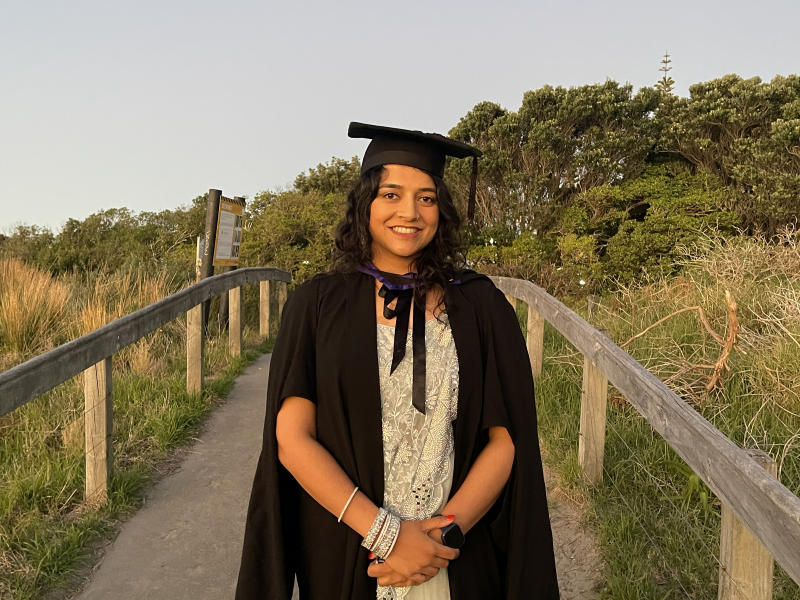
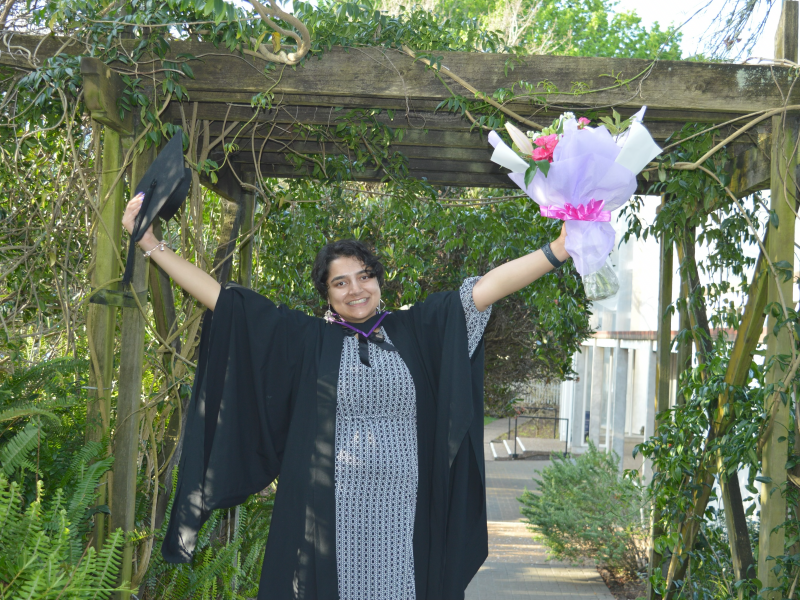
Last week, I finally graduated with my Master of Engineering degree. I completed my thesis in July 2024, received corrections in December 2024, and submitted them in January. I was eligible to graduate last year in May. But I received the email on the last day of application, when I had just gotten my wisdom tooth out and was surviving on pills and ice cream. Naturally, I missed the deadline and thought I should graduate with my sister when she graduates with her PhD. Completely forgetting that we are in different faculties, will be graduating on different days and at different ceremonies. Oh well, it turned out to be a logistical challenge, but as far as my family and getting things done go, it wasn’t that bad. Sure, there were some hiccups, but otherwise smooth sailing.
Everyone who congratulates me always tells me that I must feel so proud or so happy to have graduated. I can see why, seeing all those sleepless nights, revising, studying, endless rewriting, exams, etc., culminating in walking across the stage in a regalia, shaking the vice-chancellor’s hand and getting that degree you worked so hard for at the end. It should mean something. Yet, I have never felt happy at any of my graduations. I think it’s because graduation is supposed to close a chapter in your life and signal the start of another one. But graduation has never been that for me. My BSc graduation marked the end of my degree, and I had no idea what to do after. So much so that I went back to school. With my BE(Hon) degree, I was already in my master’s program. Then, with my master’s degree, I have been gone long enough that it doesn’t mark the end, and with where my life is, it hasn’t marked the start of another chapter either. But at least university is in the rearview mirror. For now…
One of the most interesting things about me is my education; after all, it’s the only thing people ask me about when I get interviewed. I always word-salad through my answer, but the truth is, I don’t know. I think it’s hard to form a narrative when the story is unfolding, but it’s also because I haven’t actually sat down to make sense of it. So here I am trying to make sense of it. But I will tell the truth: my name is Pooja Patel, and ever since I was 10 years old, I wanted to be a doctor.
The Dream
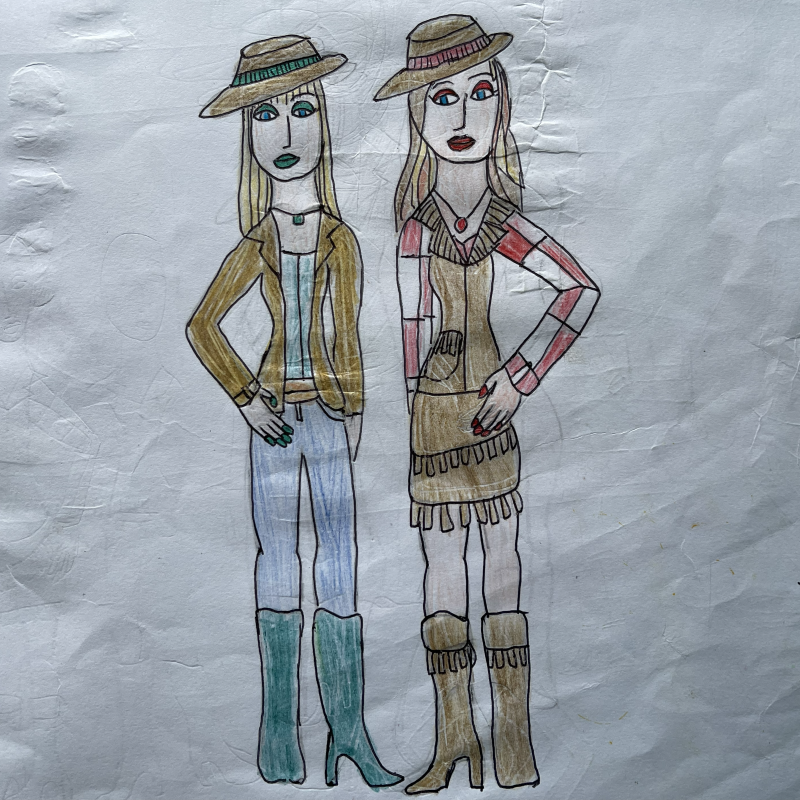
Being a doctor wasn’t the first career I wanted; I, as a kid, liked maths and drawing. I was always the best artist in my class, and the sides of my notebook would be filled with drawings if I didn’t have to keep them clean. I remember in Year 5, my teacher said I was most likely to be an artist or fashion designer because I loved drawing clothes. I was probably inspired by my then-favourite TV show, That’s So Raven, as well. At one point, I had at least five girls in my class ask me to design their wedding dresses when the time came. Unfortunately, my mum wasn’t supportive of my ambition, and watching the 2008 movie Fashion, being a designer really lost its appeal. Seriously yikes.
After that, I was lowkey interested in architecture, but then my cousin passed away suddenly. I remember him telling me way back. “That none of us cousins have become doctors, so you should do it”. So, I wanted to be a doctor to honour him. It seemed to be a good career aspiration; it was academically rigorous, and there were a ton of options to choose from. After the film Bhool Bhulaiyaa was released in 2007, I became inclined toward Psychiatry. I used to love reading books about medicine (the ones at my school library geared towards kids). Every year, on the careers NZ website, whenever we had to take the career interest quiz, I always got a doctor, or a type of doctor, as my number 1 choice. Hence, I never questioned it.
I remember, in Year 11, when I was working on an art project, my dad told me, on our walks together. “If you don’t want to be a doctor, it is fine, there are tons of different career pathways out there, you have the talent and can work hard to do other stuff. We all don’t need to be [insert the name of your very smart cousin, but mine was smarter].” I told my dad, no I want to be a doctor. I honestly believed it, and I didn’t think too hard about it.
The cracks appearing
The veneer of the dream started to chip in 2014. I had applied to the Rotary Science and Technology Forum and had gotten in. The summer before Year 13, I was at science camp with some of the smartest students in the country. They were so much smarter, more self-assured, and put-together than I was. I really felt like the small-town bumpkin, and to make matters worse, they were all so nice as well. Anyway, most of them also wanted to be doctors, which made me feel somewhat inadequate. Then we had mentors, some of whom were in medical school at Otago and Auckland, and they gave a talk that did scare me. On the last night of that camp, during the speech, we were told, “If your dreams don’t scare you, they simply aren’t big enough,” and with that message, I went home. Being a doctor scared me, but I wasn’t disheartened yet.
At the Science camp, we also learned about different career pathways. I learned that I leave really good fingerprints, so a forensic scientist advised me to avoid a life of crime (tragic). Basically, we were doing first-year labs, and one of my favourites was the ELECTENG 101 lab, where you used logic circuits to control a robotic car. I thought it was so cool, and what we learned about the department was so interesting, that I thought Engineering would be a cool pathway. Back then, I thought I wasn’t creative enough for engineering, and I found physics hard. To get into Engineering at the University of Auckland, you needed to pass all the Level 3 physics and maths externals, which seemed way harder to me than the Mean Rank Score of 280 needed to get into Biomedical Science.
Year 13 wasn’t easy for me. The problem was that we didn’t have a Level 3 Physics class; there wasn’t much demand for it, so we had to do it via video conference. Where we would miss at least 4 periods to go do Physics. So, I was constantly playing catch-up; the only subject I was ahead in was Calculus because I would do calculus homework when I was stressed. Doing calculus homework while listening to The Arkham Sessions was bliss for 17-year-old me. When we talked about university, it seemed inevitable. Still, everyone told me I would be competing with students who study up to 8 hours after school. That’s the level of commitment you need to give.
I, at the time, thought I couldn’t do it because of all my other obligations. But during university, I will, of course, study that much. Year 13 was a series of disappointments: I didn’t get DUX, the Level 3 calculus excellent endorsement or even the Level 3 NCEA excellent endorsement, and then I didn’t get into Biomedical Science. But I didn’t give up on medicine; it just meant life was taking me to Otago. Then, a week before O-week at Otago started, I got into Biomedical Science at UOA. I preferred Auckland because I had been to the campus before and would be closer to family. Plus, I am always cold. I accepted the offer, and it was official: I was going to study Biomedical Science at UOA.
Reality
The first year is still hard for me to revisit, but I will try to keep it short and hit only the main points. I remember on Orientation Day, we had a lecture where they basically told us, “You were the smartest people at your school, the top of your year. Now, every one of you is that.” It was scary, and I guess it was a reality check. But that wasn’t the only time in Biomed you got reminded of that fact. Every conversation with someone in lectures used to go like this:
Them: “Hi… what are you studying?”
Me: “Biomed, you?”
Them: “Same, are you trying to get into med?”
Me: “Maybe.”
Them: “Do you know how hard it is? Only about 250 people get in. I heard last year you needed a GPA of 7.90”
Me: “Yeah, it is hard.”
Some people wanted to psyche you out, see you fail, so they could even the odds somehow. I personally never thought of myself as the exception to the rule; for instance, if there are 1100 people in Biomed and only 250 get in, I didn’t think the odds were in my favour. On a personal level, I felt my previous study techniques didn’t work, and neither did the new ones. Studying and understanding the content wasn’t the only important thing; your marks were equally important. They haunted my every waking moment. Sometimes, when I couldn’t sleep, I would calculate the marks I needed to get a good grade and so on. Plus, everyone being as mark-obsessed as you really made everything worse.
[Aside: In hindsight, there are some things I would have done differently, but we can’t go backwards]
What also made me feel pressure was that my parents were so excited about me doing Biomed that they told everyone. When I would say I’m struggling, everyone just told me I was being too hard on myself or to work harder. Or they would reassure me that it’s not the end of the world. But eventually I didn’t do well in my Exams and even failed a course in Semester 1. However, I still continued with Biomed because I found the coursework interesting and thought I still needed to prove I could do it. There was still the grad pathway if needed.
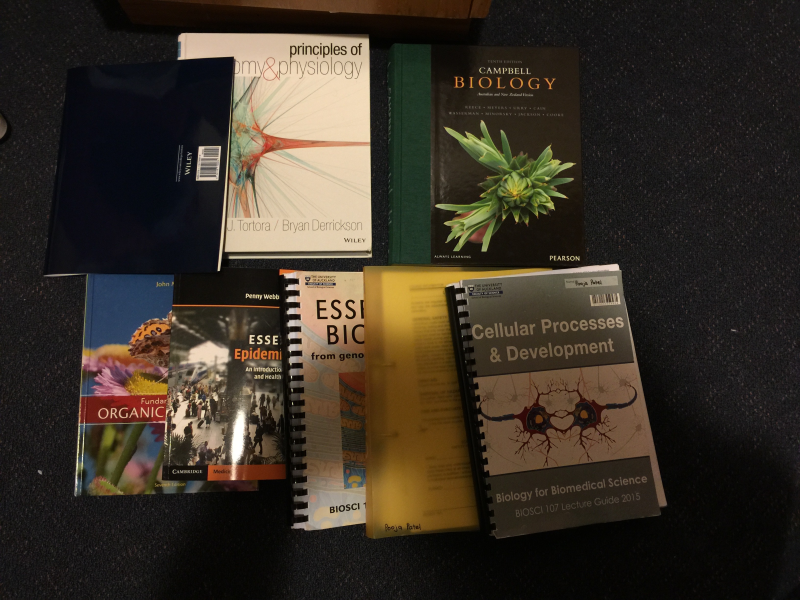
However, in Semester 2, I did give up, not on purpose, but to feel less sad. I used to spend my waking non-studying hours watching Dragonball Z. It was also, for some reason, easier to sell people on the narrative that I didn’t study hard enough than say I studied really hard and still failed. Anyway, I failed MEDSCI 142 in Semester 2 as well.
Apoptosis
In 2016, my second year, I didn’t meet the subject or GPA requirements to take the courses to continue in Biomed. I didn’t know what to live for, but I thought giving up would be too easy. I couldn’t let the first real struggle in my life defeat me. It was challenging because I couldn’t retake the paper I failed, since my GPA was too low, but I couldn’t take other papers, as that was a prerequisite. It made me think that maybe I shouldn’t have been in that paper in the first place, then.
I didn’t get the next step on what to do, but I found that in my degree, I could take some unrelated courses like maths, stats, and a gen ed course. I eventually got mostly A’s, I think. This allowed me to redo MEDSCI 142 and take the second-year core papers. I studied harder and passed, but I didn’t do as well as in the Semester 1 courses.
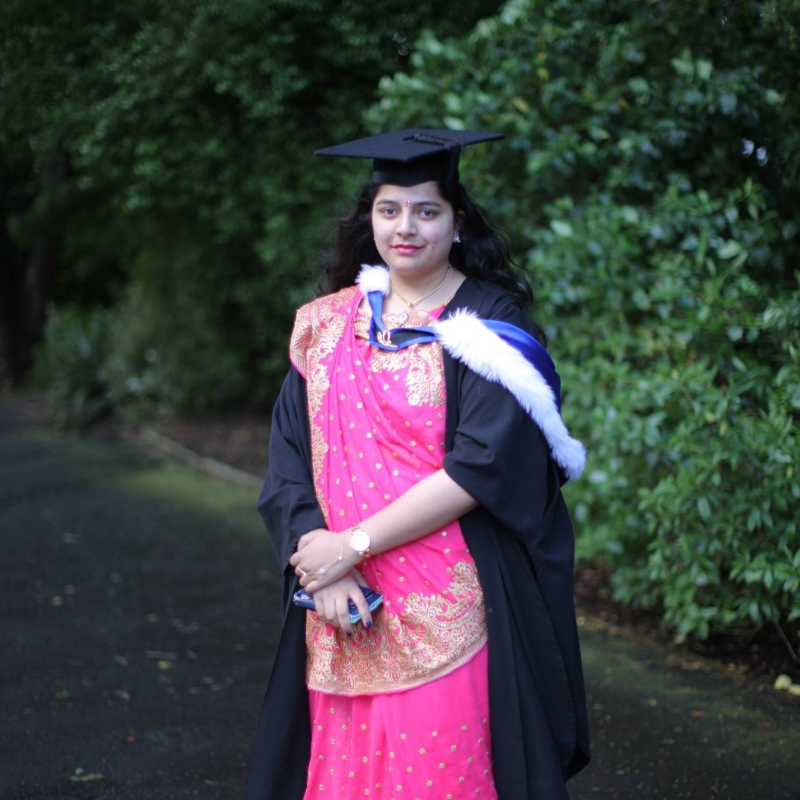
I gave my all and still couldn’t get better than a B-. It meant my GPA wouldn’t be high enough to get into medicine. My sister told me then, “You are so good at maths, why don’t you switch to maths or engineering?” But the major I was enrolled in didn’t want me, so why would any other degree or major want me? So, I persisted; I enjoyed the courses in my major, I could do something else even if it isn’t medicine, and it would only be a year, give or take. I completed my BSc degree without any more surprises. Unfortunately, my GPA wasn’t high enough for any of the postgraduate pathways.
New Beginnings
After my BSc, I went to chat with the Work and Income case workers, where we quickly tried to figure out what I should do, but it was clear that it was more studying. I had the privilege of studying more because I didn’t really have obligations. I had the freedom to study something else, if needed. But what was that something else? My sister and dad reminded me of how good I am at maths, so why not pursue something in that? That year, I attended Victoria University of Wellington’s Open Day for clarity. As I already had a BSc, I couldn’t study maths in depth. But engineering was a possibility; there was an alternative pathway into Engineering based on your Semester 1 grades, and you could transfer into the program. So, I did a Certificate of Proficiency.
I remember coming back from Auckland at the end of the semester with the certainty that if I didn’t get in, I would do a PGDip in Teaching, even though it wasn’t quite clear what subjects I could teach.
A new hope
That semester break, I remembered I had a fight with my sister a few days before, and we weren’t talking. But she was still the first person I showed the offer email to, and that was the first time she talked to me. She was like, “What?” I had gotten into Engineering, and I was a bit surprised, as my sister and her friends had tried to go through this pathway but didn’t get in. At the beginning, I thought I didn’t want to sit idly by as we accelerated towards climate change; instead, I wanted to contribute to a more sustainable planet. I didn’t know how. I didn’t have a specialisation in mind; I was like, let me see which subjects I enjoy or gravitate towards and decide based on that.
I was nervous, but at my first tutorial, many people around my age had come back to do engineering, so I immediately felt at ease, my insecurity gone. I still didn’t think much about it, but I said I wouldn’t stay if I didn’t like it or didn’t get a fairly good grade. After we got the results back for the first test, I said, “This is something I can do and want to continue.” I ended up choosing Computer Systems because I liked coding, but not enough to do Software Engineering. I was really inspired by the ELECTENG 101 course when we were writing code to control circuitry, as you could see the tangible results. I chose Computer Systems Engineering and got in.
I stand by my decision: CSE had my interest, and I preferred its culture to Biomed’s. People were nicer, and I also felt more confident. It was relatively smooth sailing considering it occurred during the Pandemic. I am grateful for the things I learned, the friends I made and the opportunities it provided. My regret with BE(Hon) is always about why I didn’t do it sooner. I could’ve probably gotten more hardware experience that way!
Why did I do a Master’s
During my third year, I floated the idea of a master’s to my dad. It was only one more year, and it didn’t seem like a time sink at the time. Then, as I didn’t get an internship to complete the practical work requirements between the third and fourth years. It felt like something to do as I couldn’t finish my degree until the second semester anyway. Also, I really enjoyed my Part 4 Project and thought a master’s would be similar.
Whenever lecturers asked me about my future plans, and I told them, they told me to do a PhD instead. Masters are too stressful, and there isn’t enough time. I was adamant to do it, and my sister had traumatised me about PhDs. Then it turned out you can’t do a master’s unless you complete all the requirements of the BE(Hon), so that plan fell through. Luckily, I did find work till then. Eventually, I was able to start my master’s, having met the practical requirements for my BE(Hon).
Master’s
I started my master’s, and I had an interesting project that I was really invested in. I read a lot of papers, but then ran into the common issues with predicting rare events in healthcare. It is an interesting process as you are basically trying to generate results that are meaningful and achievable quickly. Then you have to write a thesis based on what you completed during that time, regardless of the results.
Why not a PhD?
Honestly, I should have done the PhD back then. If I had known I was going to be unemployed for more than two years, I wouldn’t have done the master’s. I would now be in the last year of my PhD if I had done that instead.
What stops me now is that I’m turning 30, and if I go back into academia, I would have no “real” work experience in my 30s. I worry I could never step out of academia if I wished to. Then I feel I never learned to switch off studying. There are so many hobbies I have now that I didn’t have while studying. If I had an idea about my project while I was asleep, I would wake up at 3am to try and implement it. Education consumes me like that. Throughout my entire life, my self-worth has been dictated by academic validation, and I don’t know who I am outside of it.
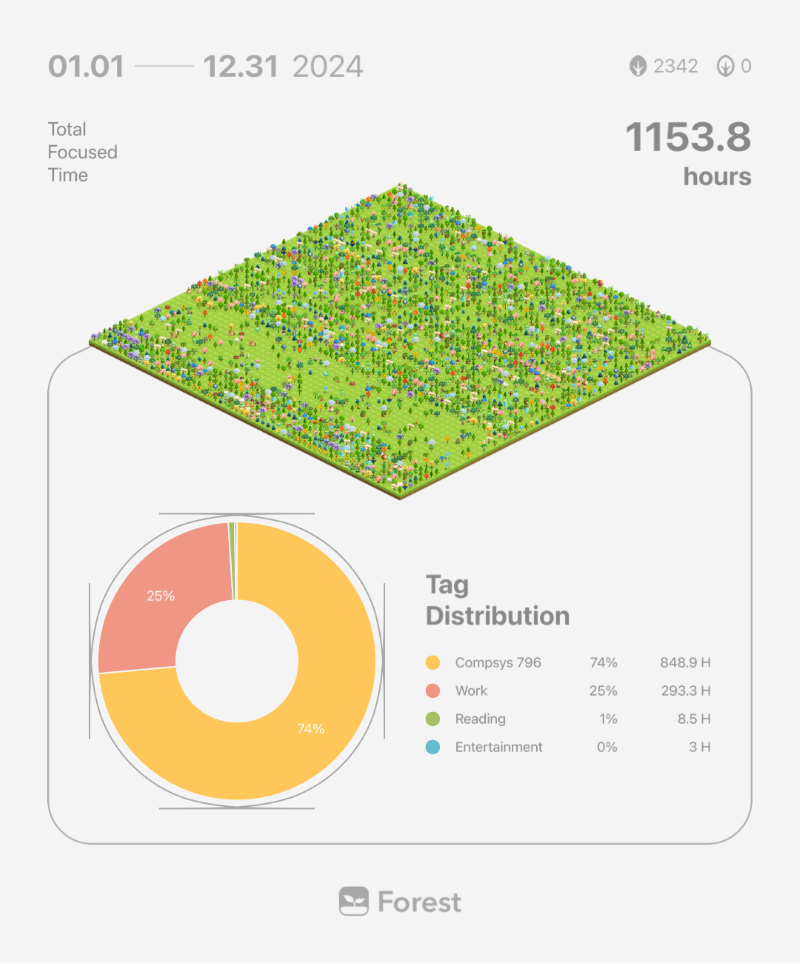
I jokingly refer to my relationship with education as a toxic relationship, an Ex I keep going back to; one of us is way more invested in it than the other. I always feel that instead of being alone, it’s better to be with them. It’s a comfort zone, and I need to step out of it.
Musings
When I look back at being a Doctor, I think it becomes clear it wasn’t for me. There are 16hr workdays, and working during a pandemic? I couldn’t, but major props to those who did. I like being in control and taking ownership of my work. As a doctor, I would become increasingly frustrated by the lack of control, such as people not following medical advice and not taking aftercare or their medicines seriously. I would become disillusioned with the job and with how I felt about the misinformation during the Pandemic, being a doctor would have made it so much worse.
For the longest time, I wished someone had sat me down and told me, “Pooja, being a doctor is not for you; maybe consider something else.” Honestly, I feel I chose the career for very fickle reasons. If in the 3 Idiots movie, Virus had told his daughters to be doctors instead of engineers, I would probably have chosen that. But it didn’t happen. I wanted to be a doctor, and sometimes you don’t get what you want. Would I try again? See above, being a Doctor through a PhD appeals to me more now. I also developed an aversion to blood along the way. I do have regrets related to Biomed. I wish I hadn’t failed the two core papers; it pushed me to select papers based on what would let me finish my degree quickly, rather than on what interested me. Pharmacology was interesting, especially Drug Toxicity. I still regret not taking the drug toxicity paper!
Why did I care so much?
Whenever I look back at my academic journey, the question that comes up is: Why did I care so much? I would sacrifice games, books, and friendships for the sake of studying. I remained focused, and I let everything fall to the wayside. I try not to let it bother me (we’re all on our own timeline and all that), but what annoys me is that there are so many milestones to adulthood, and for some reason, they stack up. Adulthood, to me, seems like a high jump rather than a ladder with rungs, as it is for others. People want me now to have a stable job, marriage, house, and even kids?! While I am still at the “what would I be when I grow up?” stage. I feel I am constantly behind, which hurts because, due to gender and birth placement, I was forced to be mature for my age. My fear growing up was the words “I didn’t expect that from you, Pooja.”
It is during those times that I wish someone had warned me and made me do engineering from the beginning. But deep down, I know if someone told me that I would have said, “How dare they think that? I am going to prove them wrong,” I wouldn’t have listened.
When you are unemployed and job hunting for long periods of time, you spend a lot of time going, “What is wrong with me?” The list is endless, the harder question is “why would someone hire me, over the 1000s of other applicants?” That I don’t know, I am not the exception. No one else knows either. People closest to you can offer platitudes; some might try to offer advice, but it’s just so out of touch with the current job market. The best people can say is that you’re not alone, but then it’s, “Why would someone hire me over others?”
Eventually, people get tired of hearing your complaints, and when asked if there is anything new, there usually isn’t. This year, I decided to fix that by doing the things I was waiting for a job to do, like learning to crochet, “working on myself”, training for a marathon, baking, making sure I don’t disappear from friends’ lives, etc. Even changing my approach to care less and apply more.
Final Thoughts
I remember when I read Grit by Angela Duckworth, she talks to a Football coach who told her the difference between a good and a bad play is whether you win the game.
That is poignant. If I were working at a Fortune 500 company or at a non-profit that contributes to sustainable business practices, I wouldn’t be monologuing about how woeful it is that I have three degrees. I would be trying to convince everyone that it’s a good idea. That’s why, when people ask me for advice, I always tell them about my experience with the warning that we are different and that my experiences would not be their experience. I stopped planning anything in my life since my first year of biomed, and from my decision-making since, it’s clear that I am flailing through life. Also, ELECTENG 101, how did that influence me so much? And I should listen to my sister more? Brb need to go ask her what to do.
The story is unfolding, and I can’t sum it up nicely. For now, I am grateful for all the people who were there throughout my academic journey. The friends I made, my lecturers, the TAs, the things I learned. At least now, if someone asks me, “So you did Biomed, what made you change to engineering?” I will answer: “Because for the longest time I wanted to be a doctor, and I had to see for myself if I could do it. I couldn’t, but engineering chose me, and I have chosen it every day since.”
In Future
Unwritten.
Until next Time!